Sean Siborey
Introduction: why cities run hot
Urban trees can cut peak monthly temperatures below 26 °C in 83% of the cities studied, and lower pedestrian-level temperature by up to 12 °C (Li et al., 2024). That makes them one of the most practical answers to the urban heat island (UHI) effect.
UHI is common in major cities where natural land is converted to buildings and roads, which have low albedo, so they absorb more heat than vegetation and warm the surrounding air. Transport and manufacturing add greenhouse gases and smog, which trap the heat released in the city.
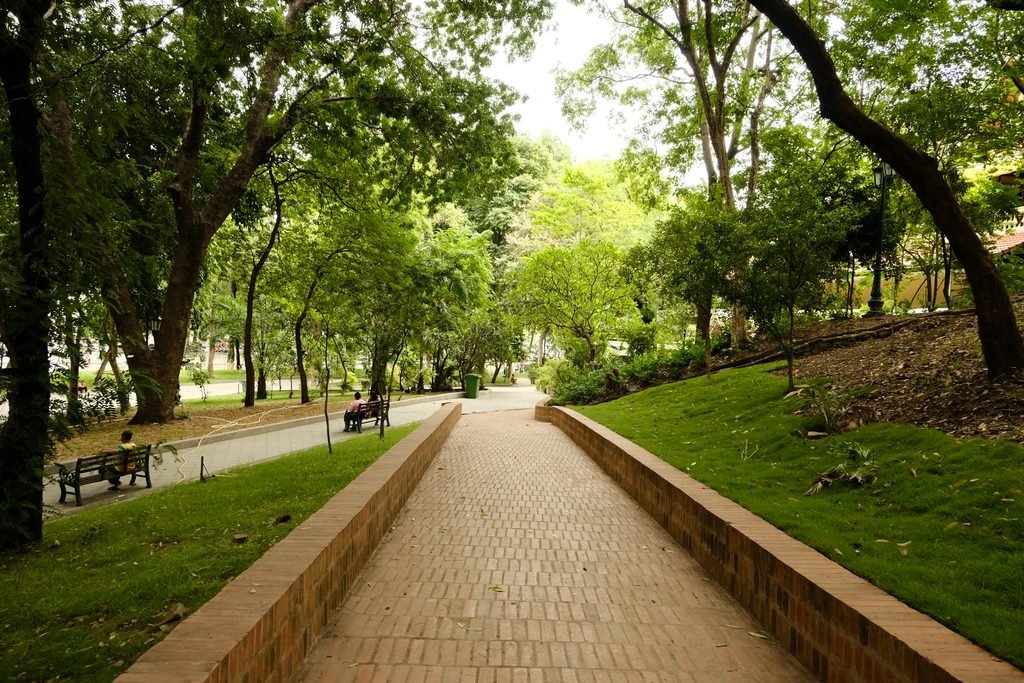
Trees counter this in two ways: shade blocks solar radiation, and evapotranspiration draws heat from the air as water evaporates from leaves. This is why parks and dense vegetation are cooler than built-up areas.
Trees also support wider goals: lower air-conditioning demand, cleaner air, better physical and mental health, quieter streets and more biodiversity. Guidelines for green, healthy, resilient neighbourhoods are emerging, such as the 3-30-300 rule introduced by Cecil Konijnendijk (2021):
- 3 trees: every resident should be able to see at least three decent-sized trees from their home.
- 30% canopy: every neighbourhood should have at least 30% tree canopy cover. This is an important threshold: the minimum at which residents benefit in health and wellbeing.
- 300 metres: every home should be within 300 metres of the nearest park or green space.
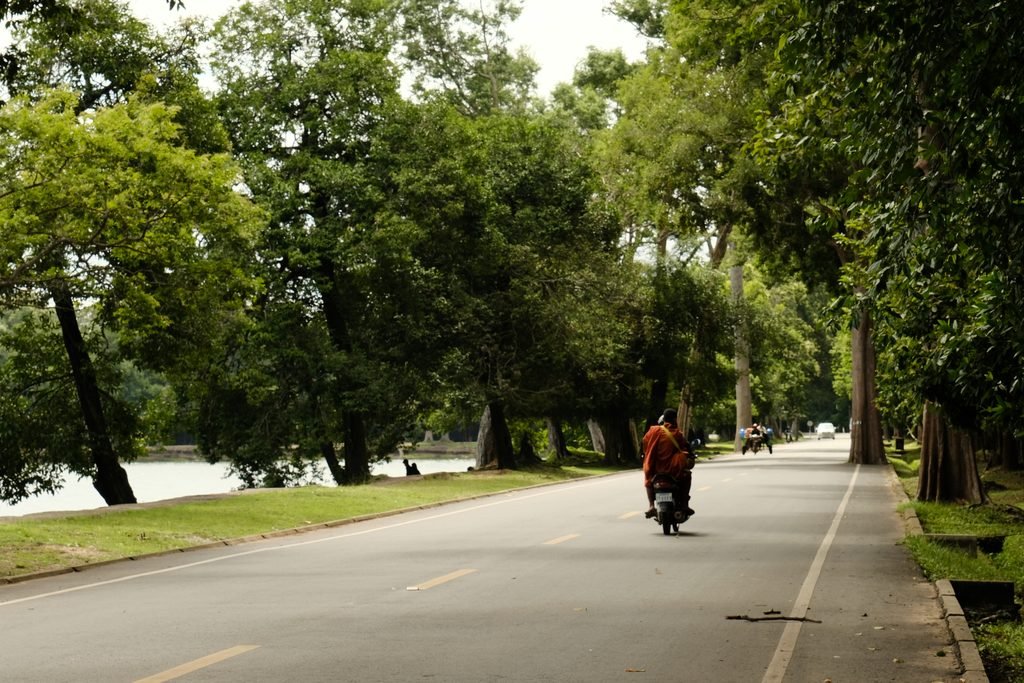
But planting more trees is not automatically better. Cooling depends on the climate, the shape of the city and the tree itself.
This matters for Cambodia. It has a tropical climate and is bracing for what is being called a super El Niño (WMO, 2026), so shading its cities with trees deserves real concern, and the right trees in the right places. Knowing which species to plant is the first step, and that is what the Trees of Cambodia project is for.
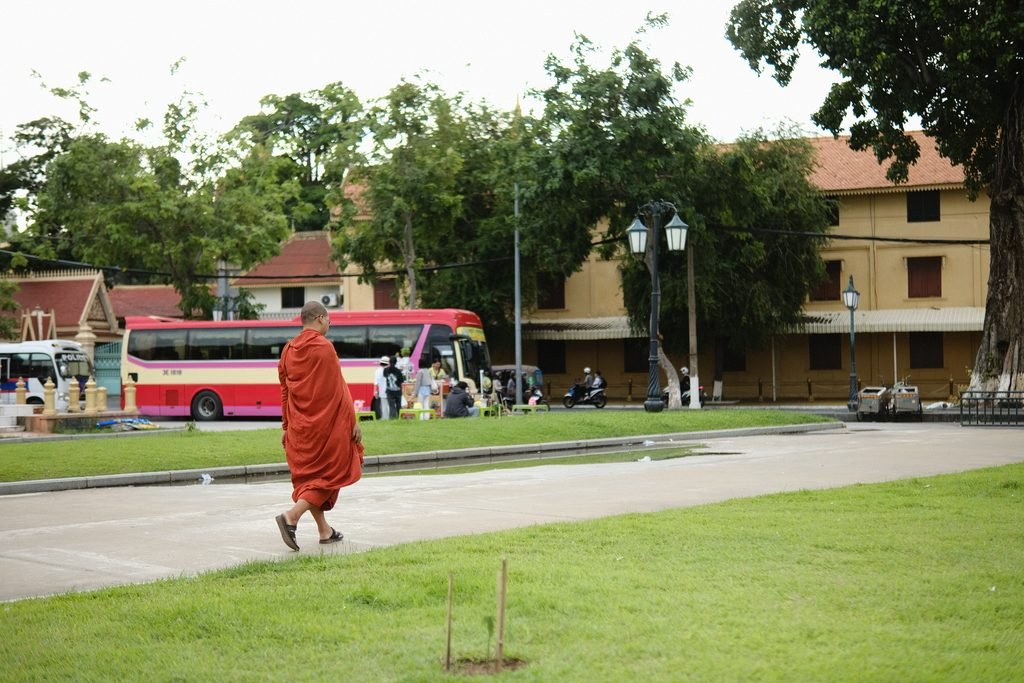
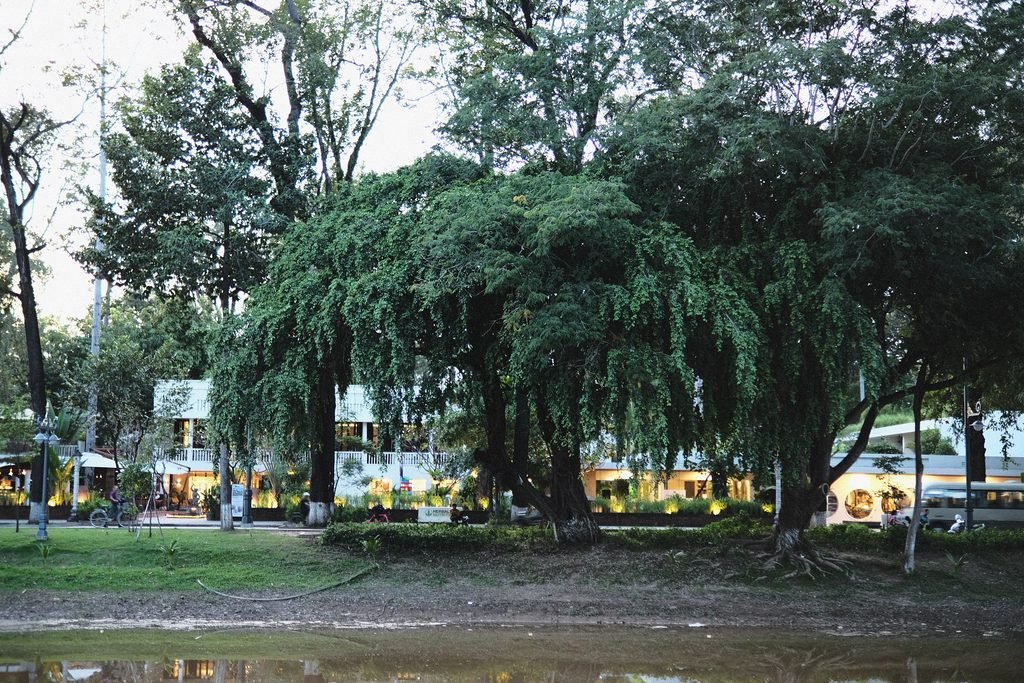
I have lived in Siem Reap, a town where mature trees are easy to find and nature is the main feature. Siem Reap is a clear example of a city rich in natural features, from small plants that people have planted themselves to huge, tall mature trees that form forest. The downtown area is also dominated by a variety of trees, which makes the city feel much cooler and a nicer place to hang out, even during the day. I hope that Phnom Penh, the city where I live now, will plant more trees and capture at least some of that sense of nature-orientated city planning, which benefits not just aesthetics but also environmental and human wellbeing.
What decides how much a tree cools
Cooling efficacy is set by three interconnected factors: background climate, urban morphology and tree traits.
1. Background climate
Cooling is strongest in the afternoon and minor at night, when stomatal closure, aerodynamic resistance and longwave radiation trapped under the canopy can reduce cooling or even cause slight warming. In tropical climates, the daily maximum air temperature change ranges from -12 °C (cooling) to +0.8 °C (warming), with peak daytime cooling of about -5 °C in Thailand, -5.6 °C in India and -12 °C in Nigeria. In humid climates the effect can be weaker, because transpiration is less effective when the air is already humid.
2. Urban morphology
Building form, road orientation, tree location and arrangement, and tree density all matter. Studies commonly use sky view factor (SVF) and local climate zone (LCZ) to describe urban form.
Denser planting generally cools more: in Saga, Japan, a 20% increase in tree density gave a 2.27 °C drop in air temperature at peak on a university campus (Li et al., 2024). But too many trees in enclosed, humid, stagnant spaces can backfire, raising physiologically equivalent temperature (PET, a thermal comfort index) by up to 2 °C. In compact zones (LCZ 1-3) with hot climates, very high canopy cover lowers SVF, weakens ventilation and traps heat at pedestrian level.
Local climate zones (LCZ) classify urban and rural land into 17 types by building form and land cover (Stewart and Oke’s system). Zones 1-3 are compact and 4-6 are open, which is the split used in the studies above.
| LCZ | Built type | What it looks like |
|---|---|---|
| 1 | Compact high-rise | Dense tall buildings, few or no trees |
| 2 | Compact midrise | Dense mid-height buildings, paved ground |
| 3 | Compact low-rise | Dense low buildings, paved ground |
| 4 | Open high-rise | Tall buildings with open space and plants between |
| 5 | Open midrise | Mid-height buildings with open space and plants |
| 6 | Open low-rise | Low buildings with open space and plants |
| 7 | Lightweight low-rise | Informal, light-material housing, little vegetation |
| 8 | Large low-rise | Wide, flat buildings such as warehouses |
| 9 | Sparsely built | Small buildings scattered in natural land |
| 10 | Heavy industry | Factories, stacks and industrial plants |
| LCZ | Land cover type | What it looks like |
|---|---|---|
| A | Dense trees | Forest or dense tree cover |
| B | Scattered trees | Light woodland or parkland |
| C | Bush, scrub | Open shrubs and short trees |
| D | Low plants | Grass, crops, open fields |
| E | Bare rock or paved | Rock, car parks, hard surfaces |
| F | Bare soil or sand | Desert, bare ground |
| G | Water | Rivers, lakes, sea |
3. Tree traits
Trees with a higher leaf area index (LAI) and leaf area density (LAD) have denser canopies that intercept more solar radiation, and taller trees keep the hot canopy farther from people at street level. Evergreens, especially conifers, block more radiation than deciduous trees, but their thick, waxy leaves close their stomata more, so they transpire less than thin-leaved deciduous species. Leaf colour and texture change albedo, and so the energy balance around the tree, while an optimised crown shape can maximise transpiration (Jiao et al.).
How they interact
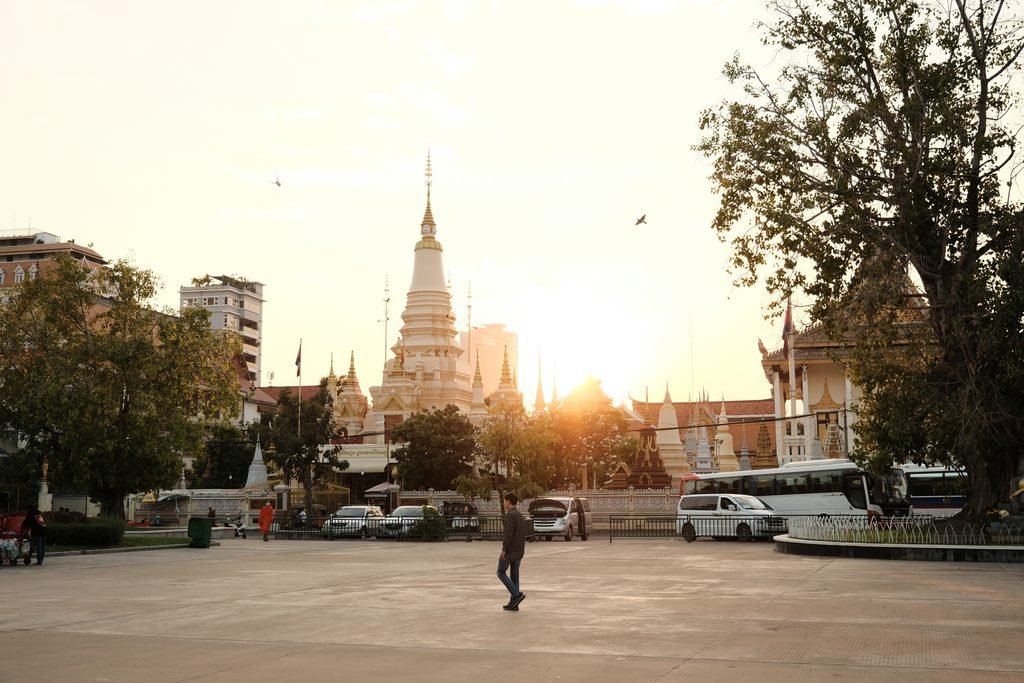
Open urban forms (LCZ 4-6) with a mix of evergreen and deciduous trees of different sizes tend to cool about 0.5 °C more than single-species planting in tropical, temperate and continental climates. Cambodia often does the opposite: its cities tend to line the whole length of a street with a single species, usually evergreen, with no mixing.
Planting strategy: right tree, right place
Choosing species and locations by available space, growth requirements and local climate means planting the right tree in the right place. Local species thrive best and give the most cooling.
Species mix
Mixing heights and types of deciduous and evergreen trees balances seasonal shade and sunlight and gives three-dimensional cooling at different heights. Evergreens give year-round cooling in tropical and arid climates. Deciduous trees suit temperate and continental climates: they shade in the hot season, then shed their leaves in the cooler season to let sun and breezes through.
Size and spacing
Trees should match the scale of the building and avoid overhead utilities (Rashid et al.).
| Planting zone | Distance from utility line and security lights | Recommended free height |
|---|---|---|
| Low | 0 to 4.5 m | under 7.5 m |
| Medium | 4.5 to 12 m | under 12 m |
| Tall | 18 m and above | over 18 m |
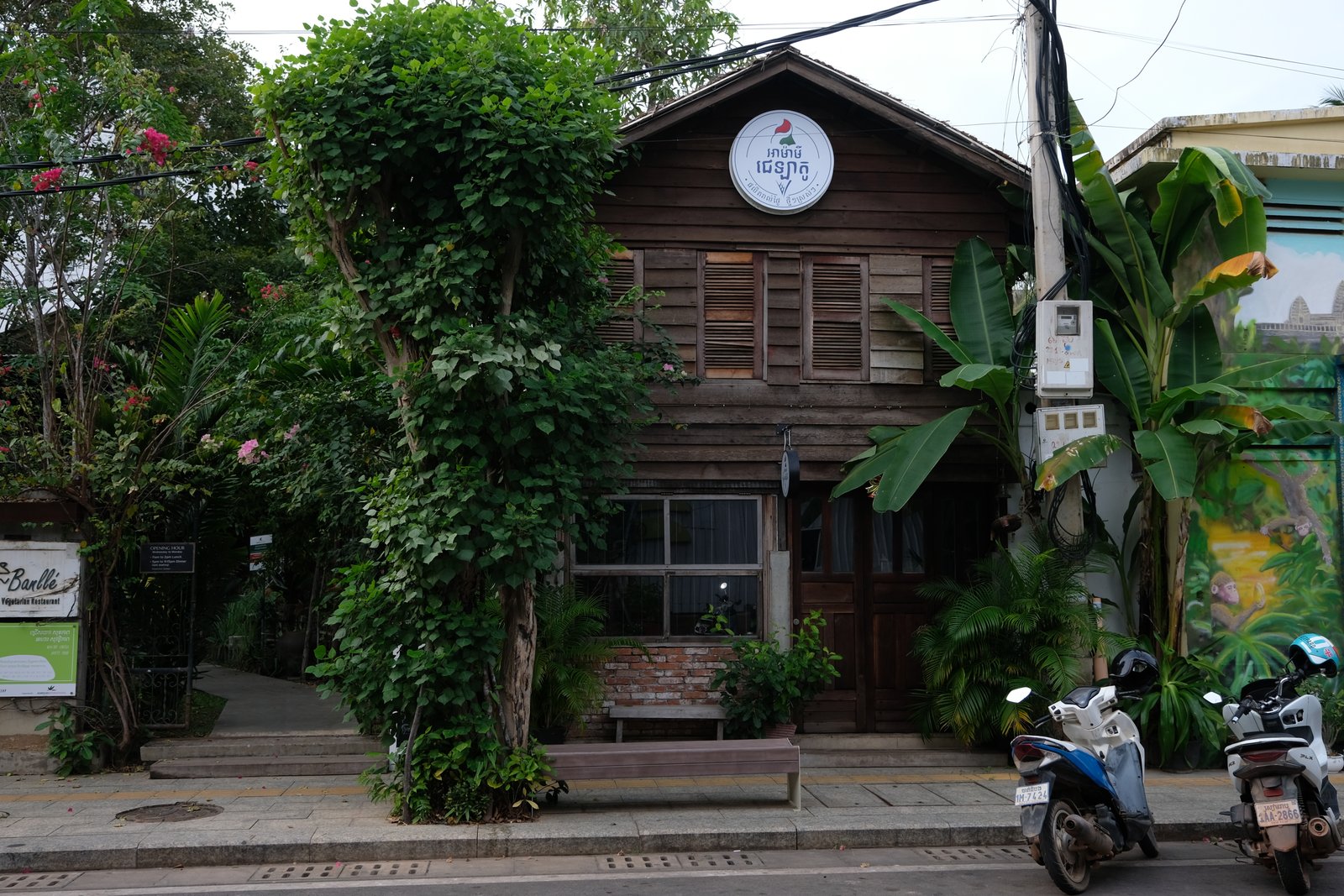
- Small trees suit narrow lawns and walkways, planted about 3 m from the house. Avoid low-branching trees at the front, so outdoor areas stay visible under the branches.
- Medium trees (up to 12 m) frame or soften a building.
- Tall trees (18 m or more) give the best shade and suit tall houses. Plant them at least 10 m away for root development.
Canopy form
- Vertical: narrow spaces, group planting, screens and windbreaks.
- Round: shade between buildings and medium streets; large lawns and roadsides when tall.
- Horizontal: wide streets, large lawns and car parks, giving wide shade.
- Weeping: open spaces such as parks and large car parks, plus wide streets, lawns and residential areas.
Compact areas
In compact urban zones, use narrow species and sparse planting, so ventilation is not blocked.
Trees on roofs
Roof and terrace trees cool through shade and evapotranspiration: 1.8 to 4 °C at the roof surface and up to 15 °C lower indoors.
Urban planning: fitting trees to the city
Tree choice and placement must follow urban form: street canyon orientation, LCZ, aspect ratio and SVF. Canopy cover raises cooling but also lowers SVF beneath the trees, so planners need to balance the two.
Climate pressure on trees
- Heatwaves raise trees’ water demand while cutting water availability.
- Very high temperatures and vapour pressure deficits close stomata, which can reduce the cooling benefit by up to 30% during heatwaves, particularly in tropical and arid climates (Li et al., 2024).
- Prolonged heat stress can kill trees, shrinking canopy cover and worsening the heat island. Outcomes depend heavily on species.
Time horizon
Young trees have small crowns and roots, may struggle in hot summers, and can take decades to reach full shade. Waiting is not practical given the urgency of warming.
Real-world initiatives
- Hong Kong: the Plantation Enrichment Programme introduces both exotic and native species to improve ecological health and reduce tree risks.
- European Union: the 3 Billion Trees initiative encourages green corridors and urban forests.
- Singapore: tree planting is built into planning policy, with green roofs and vertical gardens.
- Australia: cities promote local species such as eucalyptus that tolerate high temperatures.
Choosing the right tree with Trees of Cambodia
“Right tree, right place” only works if people know which trees they can choose from. Trees of Cambodia is an online gallery on theBUR for learning Cambodian tree species one by one, built on the Cambodia Tree Seed Project’s list of 180 species and their Khmer names. The idea is that greening Cambodian cities starts with knowing the trees.
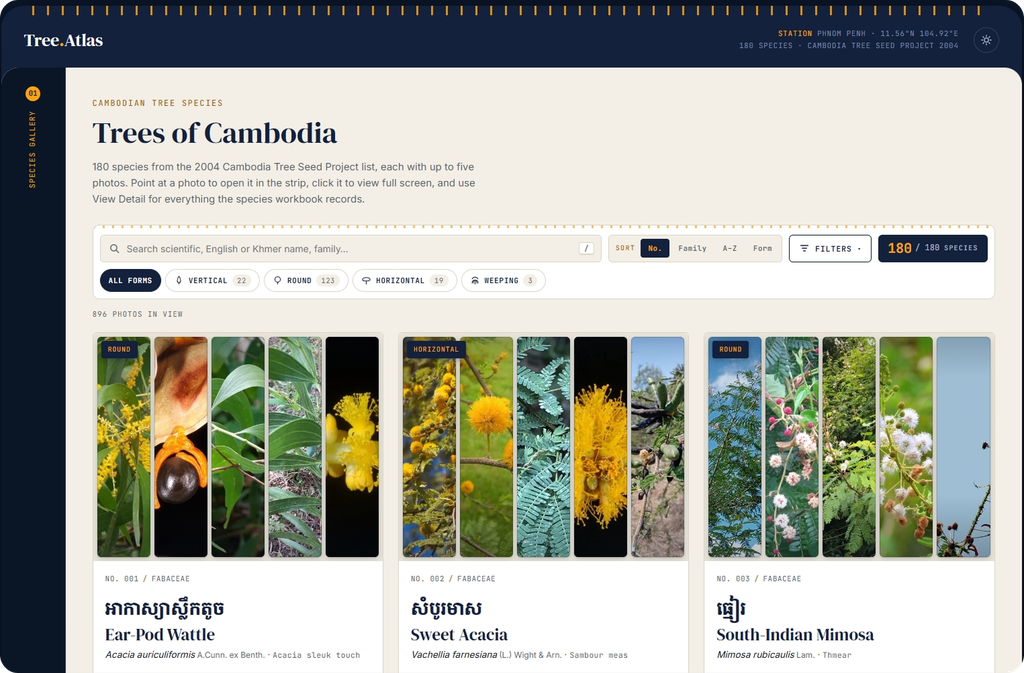
The species table behind the gallery adds the traits this post has covered:
- Size and form: height, trunk size, clear-trunk length and crown shape, to match the planting zones and canopy forms above.
- Site and origin: habitat, flood tolerance, and whether a species is native or introduced, to favour local species.
- Conservation: IUCN Red List and CITES status, so a planting does not rely on threatened species.
- Seed: storage behaviour and seed weight, for nurseries and seed collection.
- Transpiration: stomatal data, which is still thin. Only one measured value is in the sheet so far (Hopea ferrea), so treat cooling comparisons between species with care.
A simple way to use it: check the height against the planting zone, pick a crown shape for the street width, mix evergreen and deciduous species where space is open, and prefer native species that are not threatened.
My objective for this online tree gallery is to provide a highly accessible resource for researchers and urban planners whose work is to green cities, specifically in Cambodia and similar tropical climate zones. If dendrologists, botanists or arborists find any mistakes on the platform, please reach out to me so I can correct them.
Suggestions
- Short term: pair trees with solar shading and reflective materials, since young trees take years to deliver shade.
- Long term: plan for a warmer future by choosing resilient species, such as anisohydric species, and embed climate-specific strategies in urban planning policy.
- For government: follow the lead of Hong Kong, the EU, Singapore and Australia: strategic species selection and placement, green corridors, green roofs, and local heat-tolerant species.
- On the street: right tree, right place. Use mixed species in open areas, and narrow species with sparse planting in compact zones.
- Integrated GIS: mapping the existing tree species so new planting can mix species better.
- Tree nursery: Phnom Penh City Hall should allocate a large section of the former Pochentong airport for a tree nursery that supplies trees for the city’s planting efforts.
References
- Coutts, A., & Tapper, N. (2017). Trees for a Cool City: Guidelines for optimised tree placement. Melbourne, Australia: Cooperative Research Centre for Water Sensitive Cities.
- Konijnendijk, C. (2021). The 3-30-300 rule for urban forestry and greener cities. Biophilic Cities Journal, 4(2). Preprint. PDF
- Li, H., Zhao, Y., Wang, C., Ürge-Vorsatz, D., Carmeliet, J., & Bardhan, R. (2024). Cooling efficacy of trees across cities is determined by background climate, urban morphology, and tree trait. Communications Earth & Environment, 5, 754. https://doi.org/10.1038/s43247-024-01908-4
- Rashid, Z. A., Al Junid, S. A. M., & Syed Othman Thani, S. K. (n.d.). Trees’ cooling effect on surrounding air temperature monitoring system: Implementation and observation. Universiti Teknologi MARA, Shah Alam, Malaysia.
Sources for the tree species table
Numbers match the references in the Excel sheet.
Species list and names
- [1] Cambodia Tree Seed Project. (2004). List of tree species. Forestry Administration & DANIDA, Phnom Penh. (The original 181 species and Khmer names.)
- [2] POWO. (2026). Plants of the World Online. Royal Botanic Gardens, Kew. https://powo.science.kew.org (accessed October 2026). (Accepted names, families, native or introduced status.)
- [3] Govaerts, R., Nic Lughadha, E., Black, N., Turner, R., & Paton, A. (2021). The World Checklist of Vascular Plants, a continuously updated resource for exploring global plant diversity. Scientific Data, 8, 215. https://doi.org/10.1038/s41597-021-00997-6 (The checklist behind POWO.)
- [4] The Angiosperm Phylogeny Group. (2016). An update of the Angiosperm Phylogeny Group classification for the orders and families of flowering plants: APG IV. Botanical Journal of the Linnean Society, 181(1), 1–20. https://doi.org/10.1111/boj.12385
- [5] Legume Phylogeny Working Group (Azani, N., et al.). (2017). A new subfamily classification of the Leguminosae based on a taxonomically comprehensive phylogeny. Taxon, 66(1), 44–77. https://doi.org/10.12705/661.3
- [6] Ashton, P. S., & Heckenhauer, J. (2022). Tribe Shoreeae (Dipterocarpaceae subfamily Dipterocarpoideae) finally dissected. Kew Bulletin, 77, 885–903. (The Shorea to Anthoshorea split.)
- [7] GBIF Secretariat. (2023). GBIF Backbone Taxonomy. Checklist dataset. https://doi.org/10.15468/39omei (Some English common names.)
Tree specifications, habitat, branching and form
- [8] Fern, K. (n.d.). Useful Tropical Plants Database. https://tropical.theferns.info (accessed November 2026). (Height, trunk size, growth, site conditions, habitat and flood tolerance, scent, clear-trunk length and crown shape.)
- [9] Wu, Z. Y., Raven, P. H., & Hong, D. Y. (Eds.). (1994–2013). Flora of China. Science Press, Beijing & Missouri Botanical Garden Press, St. Louis. Via eFloras, http://www.efloras.org. (Flower scent.)
Wood density
- [10] Zanne, A. E., Lopez-Gonzalez, G., Coomes, D. A., Ilic, J., Jansen, S., Lewis, S. L., Miller, R. B., Swenson, N. G., Wiemann, M. C., & Chave, J. (2009). Global wood density database. Dryad. https://doi.org/10.5061/dryad.234
- [11] Chave, J., Coomes, D., Jansen, S., Lewis, S. L., Swenson, N. G., & Zanne, A. E. (2009). Towards a worldwide wood economics spectrum. Ecology Letters, 12, 351–366. https://doi.org/10.1111/j.1461-0248.2009.01285.x
- [12] Réjou-Méchain, M., Tanguy, A., Piponiot, C., Chave, J., & Hérault, B. (2017). BIOMASS: An R package for estimating above-ground biomass and its uncertainty in tropical forests. Methods in Ecology and Evolution, 8, 1163–1167. Package version 2.1.11, CRAN. (The copy of the database actually used.)
Conservation status
- [13] IUCN. (2026). The IUCN Red List of Threatened Species. Checklist dataset via GBIF.org, dataset key 19491596-35ae-4a91-9a98-85cf505f1bd3, version July 2026. https://www.iucnredlist.org
- [14] UNEP-WCMC. (2026). Species+ / CITES Checklist. UNEP World Conservation Monitoring Centre, Cambridge. https://speciesplus.net
Seed
- [15] Society for Ecological Restoration, International Network for Seed Based Restoration, & Royal Botanic Gardens, Kew. (2023). Seed Information Database (SID). https://ser-sid.org (Seed storage behaviour and 1000-seed weight.)
Stomata and transpiration
- [16] Murray, M., Soh, W. K., Yiotis, C., Batke, S., Parnell, A. C., Spicer, R. A., Lawson, T., Caballero, R., Wright, I. J., Purcell, C., & McElwain, J. C. (2019). Convergence in maximum stomatal conductance of C3 woody angiosperms in natural ecosystems across bioclimatic zones. Frontiers in Plant Science, 10, 558. https://doi.org/10.3389/fpls.2019.00558
- [17] Rundel, P. W., et al. Stomatal conductance in deciduous dipterocarp forest, northeast Thailand. Abstract record in BES Applied Ecology Resources: link. [Full title, journal and year not recorded; to confirm.]
- [18] TISTR. Ecophysiology of tropical dry evergreen forest, Sakaerat Environmental Research Station, Thailand. link (The only measured value in the sheet, Hopea ferrea. [Authors and year not recorded; to confirm.])